
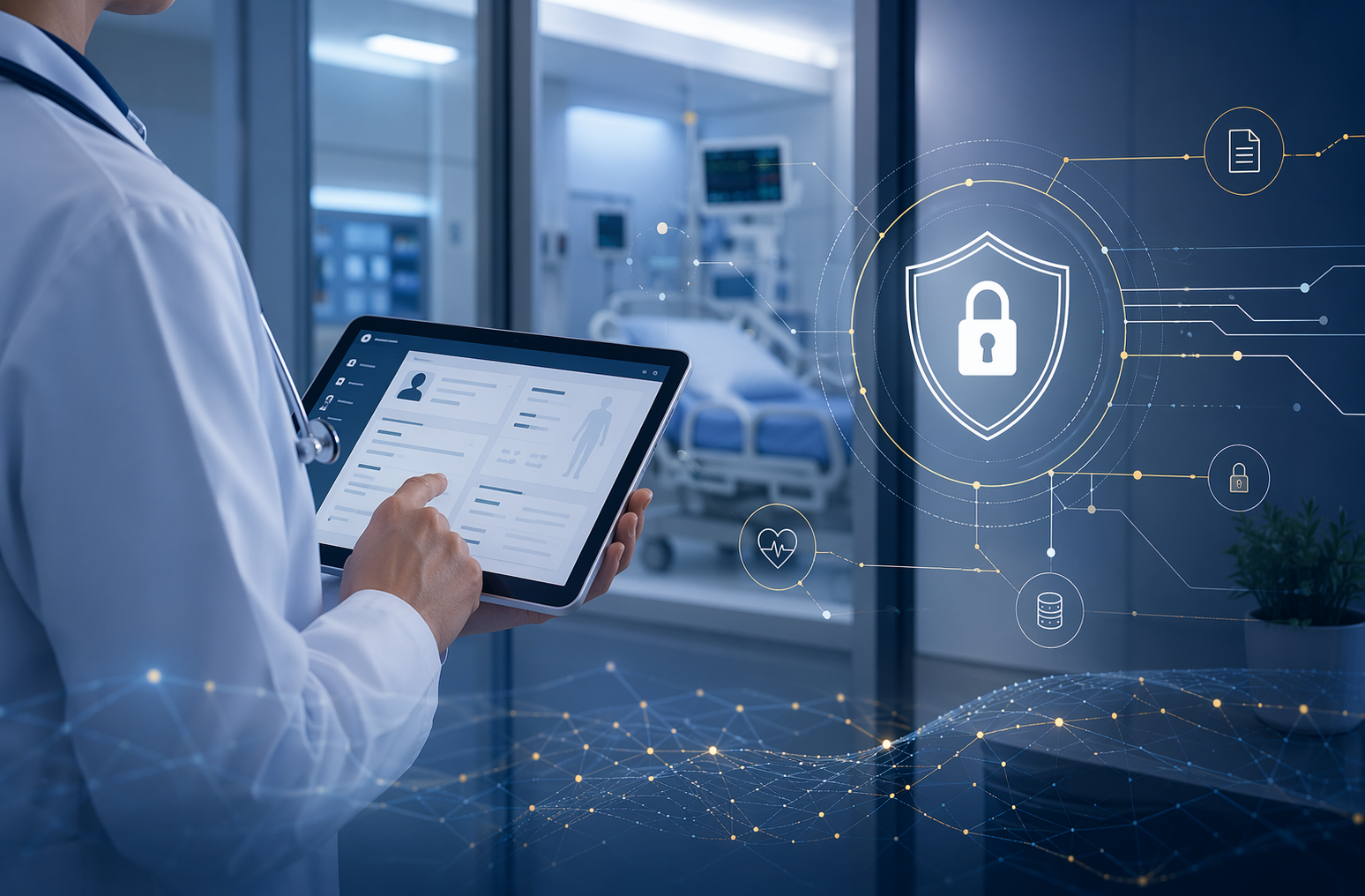
Cybersecurity in Healthcare: Why a Strong Security Foundation Matters More Than Ever
Every modern business relies on technology. From customer databases and financial systems to cloud platforms and connected devices, digital infrastructure is now at the heart of daily operations.
Because of this, cybersecurity is no longer something organisations can afford to treat as an afterthought.
A strong security baseline is not just about ticking compliance boxes. It is about protecting the business, maintaining trust and ensuring operations can continue when threats arise.
Basic security measures such as vulnerability management, system monitoring, employee awareness training, regular patching and tested incident response plans form the foundation of a resilient organisation.
Without these fundamentals, businesses become vulnerable to cybercriminals, operational disruption, financial losses and reputational damage.
While every sector needs strong cybersecurity, the stakes are even higher in healthcare.
Healthcare is one of the most targeted industries
Patient records can contain personal information, medical histories, diagnoses, treatment plans and other confidential details that are highly valuable to cybercriminals.
At the same time, healthcare providers are becoming increasingly reliant on connected technologies. From electronic patient records to Internet of Medical Things devices, technology is transforming patient care, improving efficiency and enabling better outcomes.
But every new connection creates another potential entry point for attackers.
The result is a challenging reality: healthcare organisations must balance innovation and patient care with the need to protect critical systems and sensitive data.
When healthcare is hit, it is more than a data breach
For many businesses, a cyberattack can mean downtime, lost revenue and operational disruption.
In healthcare, the impact can be far more serious.
When systems become unavailable, clinicians may lose access to patient records, appointments may be cancelled, treatments delayed and critical medical devices affected.
Every minute of disruption can have a direct impact on patient care.
This is why cybersecurity in healthcare is not simply an IT issue. It is a patient safety issue.
Protecting healthcare systems means protecting the people who depend on them.
Building a stronger security baseline
A strong cybersecurity foundation within healthcare should include:
- continuous security monitoring and threat detection
- effective vulnerability management and patching processes
- secure configuration of medical devices and healthcare systems
- multi-factor authentication and strong access controls
- regular cybersecurity awareness training for staff
- tested incident response and disaster recovery plans
- business continuity planning and resilience exercises
- digital forensic and incident response capabilities
These controls are not optional extras.
They are essential safeguards that help organisations prevent incidents, respond effectively when attacks occur and recover quickly while minimising disruption.
The NHS WannaCry incident remains one of the clearest examples of why these foundations matter. A lack of patching and preparedness resulted in widespread disruption across healthcare services, demonstrating that organisations need more than policies on paper.
They need security measures that are actively maintained, tested and continuously improved.
Protecting healthcare data means protecting trust
Patients place enormous trust in healthcare providers.
They expect their personal information to remain secure and their care to remain uninterrupted. That trust can be damaged in an instant by a cyber breach.
Protecting healthcare data is about much more than meeting regulatory requirements or avoiding financial penalties.
It is about:
- safeguarding patient privacy
- supporting healthcare professionals
- maintaining operational resilience
- ensuring patients receive the care they need when they need it
As cyber threats continue to evolve, healthcare organisations must move beyond reactive approaches and invest in proactive security strategies, continuous monitoring, forensic readiness and robust incident response capabilities.
Looking ahead
Cybersecurity is now a fundamental business requirement for every organisation.
Within healthcare, it is even more critical because the consequences of failure extend beyond systems and data. They can directly impact patient wellbeing.
A strong security baseline provides the foundation for resilience. It helps healthcare organisations defend against evolving threats, protect sensitive information, maintain patient trust and continue delivering essential services without disruption.
In today’s digital healthcare environment, protecting healthcare data is not optional. It is a responsibility.
How Positive Cyber Solutions can help
Positive Cyber Solutions supports organisations with practical cyber governance, policy development, staff awareness, Cyber Essentials readiness, incident response planning and evidence-based security improvement.
For organisations in healthcare or related supply chains, this can include support with cyber security baselines, governance documentation, business continuity planning and incident response readiness.
Contact Positive Cyber Solutions to discuss practical cyber security and governance support.
Author
Rachael Medhurst
Co-Founder of Positive Cyber Solutions
PhD student within Digital Forensics and Incident Response in the healthcare sector