
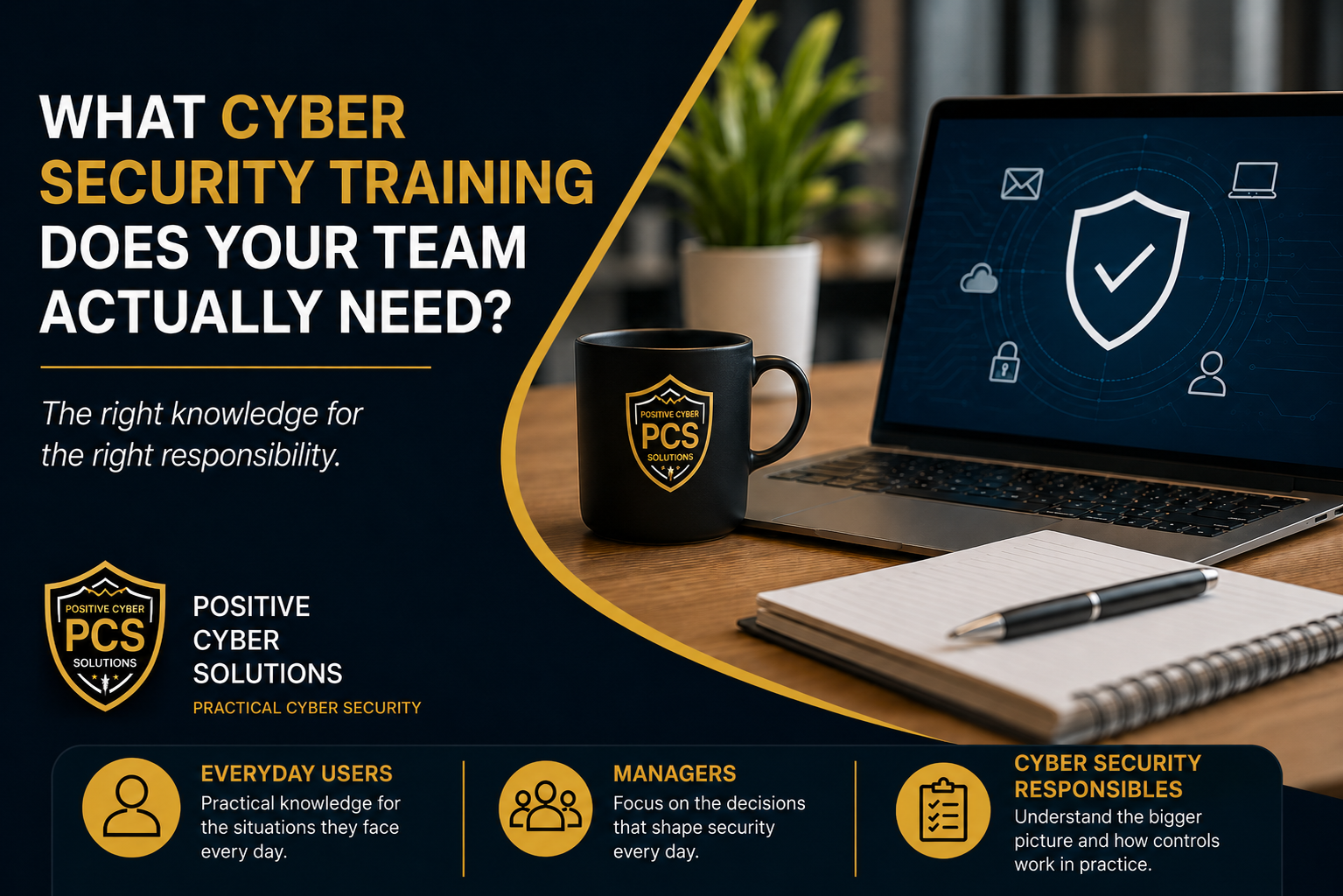
What Cyber Security Training Does Your Team Actually Need?
Cyber security training is often treated as one task: everyone completes the same course and the box is ticked.
But different roles carry different responsibilities, so the training should match what people actually need to know.
Everyday users
Most staff need practical knowledge they can use every day.
That includes:
- Using passwords securely
- Understanding multi-factor authentication
- Recognising suspicious emails and messages
- Keeping devices secure
- Knowing when to report something unusual
The aim is not to make everyone a cyber expert. It is to help people work securely.
Managers
Managers need a wider view.
They may approve software, choose suppliers, decide who needs access or deal with issues when something goes wrong.
They should understand questions such as:
- Who has access to important systems?
- What happens when someone joins or leaves?
- Which suppliers handle business information?
- Are backups in place?
- Who is responsible during an incident?
These are business decisions as much as technical ones.
Cyber Essentials
Someone responsible for Cyber Essentials needs more than general awareness training.
They need to understand the organisation itself, including:
- Devices
- Operating systems
- Software
- Cloud services
- User and administrator accounts
- Authentication
- Updates and malware protection
Organisations can have sensible controls in place but still struggle with the assessment because the person completing it is not clear on scope or how the controls apply.
That is a knowledge gap, not always a security gap.
Going beyond Cyber Essentials
Some organisations also need a broader view of cyber security.
IASME Cyber Assurance looks at wider areas such as people, assets, suppliers, data, risk, backups, incidents and governance.
For smaller organisations, it can provide a structured way to look beyond the technical controls covered by Cyber Essentials.
Three questions to ask
Before choosing training, ask:
- What decisions does this person make that could affect security?
- What systems, data or access are they responsible for?
- What do they need to understand to make those decisions safely?
Those three questions are often more useful than job title alone.
The aim is not more training.
It is giving the right people the right knowledge.
Our next Cyber Essentials Readiness Workshop takes place on Thursday 22 October 2026 at Cardiff City Stadium, with a practical half-day session focused on understanding the assessment before submission.